
Big Influence: Teddy Pendergrass

A Great Inspiration; Soulman of the Finest Grade
| By Amir Said (Sa’id) |
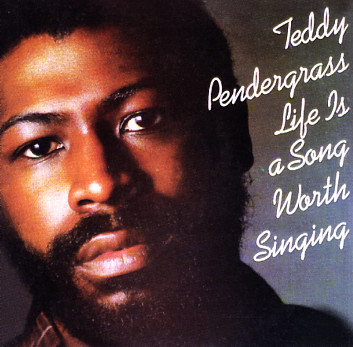 In my car’s CD changer, there is one song that I have never removed…nor will I ever remove: “I Miss You,” by Harold Melvin and The Blue Notes featuring Theodore Pendergrass. The talents and significance of Harold Melvin and the other members of The Blue Notes aside, Theodore “Teddy” Pendergrass is the reason that the song stays in my car’s CD changer.
Of the many black American soul recording artists that I favor, Teddy Pendergrass has always been among the top five (or so) who have influenced my musical understanding the most. With a steady, stern, and unmistakeably masculine vocal styling, Teddy Pendergrass didn’t so much as sing as he did croon. In spite of the fact—or, perhaps, because of the fact—that his singing voice was an unapologetically raspy-tinged bass cadence, Teddy Pendergrass cradled each lyric in a song, always mindful of his limitations but even more deferential to the soulful possibility of each note he considered.
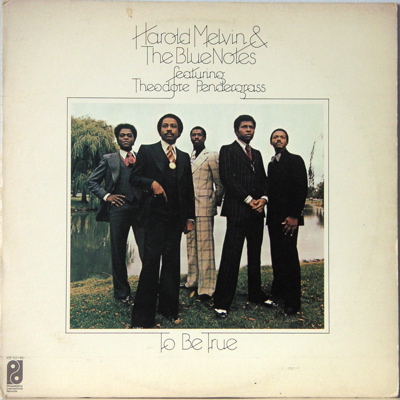 I’ve always believed that Teddy Pendergrass’ unique cadence was further enhanced by his uncanny mastery of any song’s groove. Slow, mid-, or up-tempo, it didn’t matter, Teddy Pendergrass would take the rhythm and groove of any song, and suspend its factual tempo, prompting even the most basic of arrangements to come much more alive and vibrant.
Here, I’m compelled to point out that Teddy Pendergrass, even as a bass-baritone vocalist, was a master of the “understated note.” He never took more from a note than it could spare. Instead, he allowed each note to breathe on the terms of the lyric’s poetics. Whatever the context, whatever the direction and depth of the song’s lyrics, he would always conjure up the exact tone and feeling. Undoubtedly, Teddy Pendergrass’ command of time, notes, and lyrics was due, in large part, to his abilities and training as a drummer.
Teddy Pendergrass has now passed. And although it is perhaps cliché to say that his music will still live on, I find solace in that fact; especially when I consider how far contemporary soul—or rather, “R&B”—has fallen.
Teddy Pendergrass – “My Greatest Inspiration”
Teddy Pendergrass – “My Greatest Inspiration” (Live performance)
Harold Melvin and the Blue Notes featuring Teddy Pendergrass – “I Miss You”
