James Brown, Say It Loud - I'm Black and I'm Proud (1968)
The Meters, The Meters (1969)
Led Zeppelin, Led Zeppelin (1969)
Led Zeppelin, Led Zeppelin II (1969)
Curtis Mayfield, Curtis (1970)
Led Zeppelin, Led Zeppelin III (1970)
Led Zeppelin, Led Zeppelin IV (1971)
Aretha Franklin, Young, Gifted and Black (1972)
The Jimmy Castor Bunch, It's Just Begun (1972)
Harold Melvin & The Blue Notes, I Miss You (1972)
Led Zeppelin, Houses of the Holy (1973)
Stevie Wonder, Innervisions (1973)
The Beat (aka The English Beat), I Just Can't Stop It (1980)
The Beat (aka The English Beat), Wha'ppen (1981)
The Beat (aka The English Beat), Special Beat Service (1981)
LL Cool J, Radio (1985)
Marley Marl, In Control (1988)
Main Source, Breaking Atoms (1990)
Gang Starr, Step in the Arena (1991)
Dr. Dre, The Chronic (1992)
Nas, Illmatic (1994)
50 Cent, Get Rich or Die Tryin' (2003)
RIGHTS DISCLAIMER:
BeatTips.com is a website dedicated to music education, research, and scholarship. All the music (or music videos) provided on this site is (are) for the purposes of teaching, scholarship, research, and criticism only! NOTE: Under U.S. Code, Section 107 “Limitations on exclusive rights: Fair use” of the Copyright Act of1976: “Notwithstanding the provisions of sections 106 and 106A, the fair use of a copyrighted work, including such use by reproduction in copies or phonorecords or by any other means specified by that section, for purposes such as criticism, comment, news reporting, teaching… scholarship, or research, is not an infringement of copyright."(U.S. Code)
Steady Swing-Beat Anchors this Little-Known Gladys Knight & The Pips Gem
By AMIR SAID (SA'ID)
One of the greatest benefits of being a beatmaker (particularly one that scours through scores of old records) is discovering "new" musical gems by some of the titans of recorded music. Such is the case with the wonderfully arranged "No One Could Love You More" by Gladys Knight & The Pips.
Driven by a swinging backbeat that places emphasis on the traditional "2" rather than the "1," (a beat emphasis pioneered by James Brown and his funk sound, first introduced in 1965), "No One Could Love You More" features a groove that churns and turns over as the song progresses in all of its repetitive glory. Look inside the hood of the groove, and you will find that it's flanked by several engaging musical components. First of course, there's the classic Motown tambourine dropping in on the "1;" then there's a light, pitter-patting, syncopated snare pattern that oozes with old rent-party celebratory charm; and finally, there's a silky 4-note bass line that rumbles, glides and "walks," as it ascends every two bars, before returning to the bass line's core pitch.
Recorded ca. 1971 and released by Motown the following year in 1972, one might say that "No One Could Love You More" was overlooked. Buried deep in the album as song number 10, the last track on the entire album, perhaps it was thrown on to the LP as a bonus—considering the fact that plenty of albums during the same era routinely carried just 7 or 8 tracks. "No One Could Love You More" was never released as a single, and this proved to be one blunder that foreshadowed Motown's inability to retain Gladys Knight & The Pips.
But whether "No One Could Love You More" was intended for obscurity or not, no doubt a casualty of Motown's—and the music industry's—hit-first ethos, its drawing power is absolutely undeniable. Here, before their explosively popular albums Neither One of Us and the Curtis Mayfield produced Claudine, Gladys Knight & The Pips are in top form. The naturalness of family harmony is here; The Pips' incredibly nuanced vocal stylings are here; and of course, Gladys Knight's piercing, beautifully raspy voice is here, breathing a heart-torn life into every lyric as only she can. Having discovered "No One Could Love You More" much later than some of their other music, I can't help but wonder how much of my musical understanding could have (would have) benefited, had I "found" Gladys Knight & The Pips' "No One Could Love You More" much sooner.
The music and video below is presented here for the purpose of scholarship.
Gladys Knight & The Pips - "No One Could Love You More" (1971)
Stevie Gives Popular Beatles Tune a New Punch and Feel
By AMIR SAID (SA'ID)
Although the art of sampling is usually not a complete reinterpretation of someone's work in the same way that a traditional version is (i.e. in sampling, snippets and phrases are literally extracted, recontextualized, and refashioned into a new musical piece), I still see a link—subtle as it may be—between sampling and the ways in which one musician is inspired to reinterpret the work of another. For me, this point is illuminated even more when you consider that the art of sampling is rooted in the long-held tradition of versioning (in The BeatTips Manual I cover this connection extensively).
Indeed, as a beatmaker, particularly one with a strong affinity for the art of sampling, I appreciate when great musicians do their own versions (covers) of equally impressive musicians. Mostly, I'm engaged by one musician's ability to convert the work of another into their own style, feel, and scope, without losing the core themes and structures of the original. More specifically, I'm impressed when one's version (interpretation) remains respectful to the original and adds new nuance and dimension to it as well. This is the case with Stevie Wonder's remake of The Beatles' hit "We Can Work It Out."
As far as creative license goes, Stevie Wonder takes grand liberty with his version of one of The Beatles' most popular hits. There are numerous instances where rock groups have dipped into the blues/soul well, pulling out tunes and reworking them with "rock pop magic." But with his version of "We Can Work It Out," Stevie Wonder is doing the reverse. He's taking a rock number—in this case, a 1960s folk pop tune—and dipping it back into the blues/soul well. And what emerges in Stevie's version is a song that respects the original, while going beyond, adding an entirely new scope, essence, and vibe.
While Stevie Wonder shadows the basic structural framework of the Beatles' original, there are a number of new dimensions that he adds for his version. Stevie's remake starts with an 3-bar organ intro (a signal that Stevie's signature will be all over this version), then the drums crash in. And while the original actually has a nice rhythmic pattern (albeit tucked low in the mix), the Stevie version amps up the drum scheme, making the drums, as well as the entire piece, sound more "meatier" than the original. The kick and snare drums punch and pounce, springing off of each other, while the hi-hat and tamb shuffle throughout.
For the rest of the arrangement, Stevie Wonder makes two other standout changes. First, he strips out the strings that stream through original. This "tightens up" the groove of "We Can Work It Out," effectively making Stevie's cover edgier while rendering the original almost tranquil in comparison.
Second, Stevie Wonder incorporates a milky bass line that "walks" in deference to the priorities of soul more than it does to rock. This, along with the drums as described earlier, also adds to the urgency and aggressiveness of Stevie's version, which makes the original, folksy as it is, sound much more passive aggressive. Here, I'd be remiss if I didn't also highlight Stevie's harmonica solo at the midway of his version.
Finally, Stevie Wonder's treatment of the vocal arrangement is as impressive (if not more) as everything else in his cover of "We Can Work It Out." Six bars into Stevie's cover, and we hear a voice belch out "Hey!" This "Hey!," an added background vocal element that's non-existent in the original, alternates in pitch, giving Stevie's cover a unique swing nuance not found in the original. And with the rising gospel background vocals turn up in the latter half of Stevie's cover, the tune slides briefly into the Black church music tradition.
Then of course, there's Stevie's lead vocals. A comparison of Paul McCartney's or John Lennon's vocals to Stevie Wonder's is perhaps an unfair or misleading one at best, inasmuch that Stevie Wonder and the two Beatles front men are approaching the song from two different traditions, with two entirely different vocal priorities and styles of vocal inflection. Still, it's worth mentioning that Stevie's soulful reworking of the original—no doubt powerful in its own glory—makes it sound more searing; indeed, converting it into a freedom song/black power amalgamation.
In short, Stevie Wonder's version of "We Can Work It Out" is nothing short of a magnificent transformation. And to a certain degree, you could say that Stevie Wonder "flipped" the Beatles original. Does that mean that Stevie Wonder's version of "We Can Work It" is better than the original? I'm not sure if that's a question worth entertaining. Both The Beatles original and Stevie Wonder's version are great
music works. Each shine in their own regard, and each travel along the paths of their creative priorities and influences.
So a far better question at this point might be what do you think enables any musician to pull off a quality version of a fellow musician's work? Well, I'd say that along with music performance skills as well as a broad based knowledge of music history, various musical processes, and music forms, a fundamental respect and reverence for the musician(s) whose music you rework is key. I think Stevie Wonder covers all of these variables. And that's exactly why his version works so well.
The music and videos below are presented here for the purpose of scholarship.
A Blues Man Was Arguably The Greatest Rock 'n'Roll Guitarist In History
By AMIR SAID (SA'ID)
As broad as my musical tastes might seem, I've finally come to this realization: At the core of my interest in any music form is my fundamental affinity for the blues. In particular, I'm engaged most by those musicians who use the blues as the basis from which they draft their core sound.
Interpretations of the blues can be heard in every twentieth-century American popular music form. And translations of the blues in rock 'n' roll offer up some really great tunes. And among the rock greats who best fed the blues into the roots of their rock 'n' roll, stands Jimi Hendrix, whose rock-blues I believe has no rival.
The music and videos below are presented here for the purpose of scholarship.
Soul music historians can say what they will about the Motown Sound. Many argue that it is the most recognizable sound ever recorded by any single record label. That’s cool. But the “Philly Sound,” the sound relentlessly ushered forward by the famed production duo, Kenneth Gamble & Leon Huff, is, in my opinion, the meanest, most soulfully consistent sound ever recorded. Pure inner city soul music that just cooked! Their sound was one of the most disciplined, gimmick-free, distinctive sounds that I’ve ever heard.
In 1971, Gamble & Huff started Philadelphia International Records. Throughout the balance of the 1970s, the pair worked jointly on songwriting and production for many of the biggest soul recording artists of the era. In their prime, you could stick any artist with Gamble & Huff, and it was a guarantee that that artist would improve 100% fold! When they produced for an artist, they didn’t just rent out their sound, like many of today’s prominent hip hop/rap production teams. On the contrary, Gamble & Huff lent their sound to an artist, and asked that artist to simply enhance it.
The team put together by Gamble & Huff also included arrangers Thom Bell (who grew up with Gamble in the same neighborhood) and Bobby Martin. And like Motown’s Funk Brothers, Philadelphia International Records’ house band, MFSB, (a rough-city group made up of Philly veteran studio session and road players), kept Gamble & Huff’s signature sound steady and ready with smooth time, velvet harmonies, and pulsating rhythm.
Whether it was love slow jams, disco, or raw soul, the duo injected their sound, which was an infusion of different eras of soul music (notably doo woop and 60s R&B). Gamble & Huff were also champions of humanitarianism. Much of their songwriting contained unflinching social commentary. In fact, Gamble once stated: “We wanted to take social themes and translate them to commercial recordings.”
Lyrics, Drums, and Horns Collide For Dope Ska Song
By Amir Ali Said
The Beat (The English Beat) is certainly one of my favorite soul/ska bands. My father (Sa'id) and I have a greatest hits album that we always listen to. It's really hard to maneuver through the CD because we like every song. We both have many favorites; "Mirror in the Bathroom," "Twist & Crawl," "Save It For Later," "Too Nice To Talk To," and many others. But, my favorite song is "I Confess."
"I Confess" starts off with a high-pitched piano riff. Then slow tempo rhythmic drums come into the picture, along with some vocals. For the chorus, the song goes into an up-tempo relaxed mode. Horns are coming in and out, and the bass guitar stays strong in the backdrop. The drums are moving all around, and the song has a nice swing to it. Another highlight of the song is the vocals.
Dave Wakeling's vocals in all of The Beat's songs are energetic. In almost every song, he has a touch that makes you think about any and everything when listening. In "I Confess" his tone is up-tempo and almost sad. He's singing about how he ruined a couple lives, and now he realized he ruined his as well. That base of the lyrics is incredibly cool.
The Beat had three albums together, and a number of singles. Most of those singles made their way onto the Beat's best hits album that Pop and I have. Since the first time I heard the Beat, I liked their sound and the unity in the songs. The Beat is certainly a group to be studied because of their music. In those three albums the Beat illustrated Jazz, Funk, and Ska effortlessly. Unfortunately, The Beat broke up in 1983, after their final album, Special Beat Service. Although The Beat broke up in 1983, they are one of my favorite groups and the songs they had together are to be remembered.
Famed Jazz Fusion Artist And Sampling Mainstay, Discusses His Views On The Art Of Sampling In Hip Hop/Rap Music
By Amir Said (Sa'id)
I've been diggin' thru and for records since I was a little kid. My parents, like most (if not all) other black urban dwellers of the late 1970s and early 1980s, had a quality vinyl record collection. And since my mother was an avid Motown fan and my father a strong Stax supporter, their collection—together—was massive. Indeed, when I became conscious of "diggin' in the crates," I went about packing their collection into separate milk crates. Total count of milk crates from that weekend? 15.
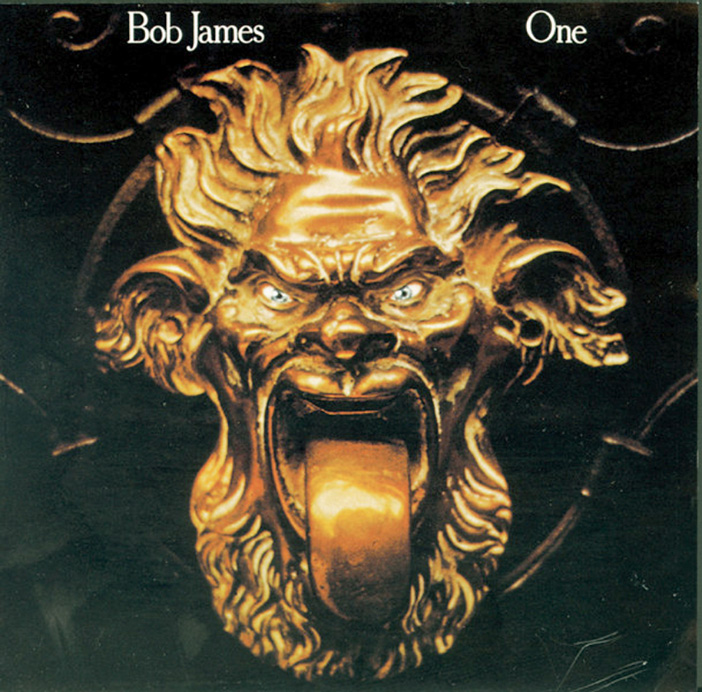
Even though I had thought that I was a kind of a serious digger, I really wasn't. But when I turned 19, and started actually listening to ALL of the records in my parents collection, I realized that I had a hunger for more. And thus, began my first real trips to used vinyl stores, Salvation Army stores, Goodwill stores, garage sells, and vinyl record conventions. And early on, there was one record that I felt I had to have: Bob James' One.
Bob James's music has been sampled by a bevy of beatmakers, and one song in particular, "Nautilus," has received a number of dope transformations. So for me, any interview with Bob James—a musician I truly admire—is well worth watching. But a Bob James interview in which he (1) reconciles his views on the art of sampling in hip hop/rap; (2) discusses sampling in a creative context; and (3) sheds light on how he structured his record contracts, after his departure from the CTI label? Aw, man, that's absolutely priceless!
For educational purposes...
Bob James Interview (via Mixery Raw Deluxe)
For educational purposes...
Bob James - "Nautilus" (from the album One, (1974)
Naturally, I favor critics who can actually excel in the field in which they criticize. Such is the case of the late Jerry Wexler, a former music journalist who went from covering music to making music. Wexler didn't play sax or piano; he didn't play drums or guitar; but he made music still the same.
As a co-owner of Atlantic Records (before the big conglomerate sell-off), Jerry Wexler didn't just peruse financial statements like many of today's label execs; on the contrary, he participated wholeheartedly in the music process. During his tenure at Atlantic records, Wexler (along with partner and Atlantic Records founder Ahmet Ertegun), signed and produced a wide range of recording acts, including most influential to me, Aretha Franklin and Led Zeppelin. Though he's probably most well-known for his work with Aretha Franklin (he produced 14 hit albums for her between 1967 and 1975), and Ray Charles, there are two other contributions that Jerry Wexler made that are equally if not even more impressive.
A little-known bit of trivia is the fact that it was Jerry Wexler who coined the term "Rhythm & Blues" (R&B). Before this, this deeply rich, inviting blues-based music was commonly known as "Race Records." Wexler's coinage helped project a level of dignity over an important lesser known black music, in a time steep with racism and cultural oppression. Another little-known fact is Jerry Wexler's involvement with seminal soul recording label Stax Records, the nurturing home of the likes of Otis Redding, Isaac Hayes, Al Bell, and Booker T. & the M.G.s. More specifically, Jerry Wexler played a pivotal role in the development of one of the best soul rhythm sections of all time, the Muscle Shoals rhythm section.
There's this movie, Once Were Warriors, that tells the story of a small family in New Zealand, struggling to make it in a world that is quite unfamiliar to their tribal ancestors. In the movie, the main character—the matriarch of the family—comes to a bittersweet but redefining point: She realizes that all of her immediate family's woes have occurred because of their disconnect to their heritage and tradition.
Watching the following performance of James Brown on Soul Train, gives me such a bittersweet feeling, because it speaks to a time where there was no disconnect to heritage and tradition...
Down-Home Blues Driven Rock Marked by a Rock Steady Central Groove
By Amir Said (Sa'id)
For educational purposes...
Led Zeppelin - "Hey Hey What Can I Do"
One of Led Zeppelin's finest offerings, "Hey Hey What Can I Do" is yet one more demonstration of the group's ability to interpret the blues within an amped-up "rock" context. In fact, as is often the case, Led Zeppelin didn't as much play "rock" with a blues feel as they actually played the blues with various rock nuances.
"I have been producing beats for a number of years now, and finding this caliber of literature is not always easy. Your book is ridiculously tight, your enthusiasm, knowledge and passion for the culture is spilling from each page. Your writing style is so, that I couldn’t put the book down, I rolled meticulously from cover to cover I didn’t want to miss a sentence. This book has inspired me in a big way, so for that, I wanted to thank you. Keep doin what you do." —Phil Rose
"Comprehensive, passionate and scholarly, The BeatTips Manual is much more than an instruction book for hip-hop producers...It is a thorough analysis of the hip-hop aesthetic itself. Highly recommended for anyone that takes hip-hop culture seriously." —Joe Schloss, Ph.D, Professor,
New York University
"The BeatTips Manual is one of the best investments I have made in beat making and as a fan of hip hop...the sheer size of the book is amazing. The BeatTips Manual has definitely given me a lot to think about. Thank you very much for your efforts and work in this book. It needs to be required reading for anyone getting into beatmaking or hip hop production."
—Charles Purnell
"Ive had the 5th edition for a few weeks now and the book is nuts man. The book is huge and full of more goodness than the 4th with an even more extensive look at hip hop's roots, culture and production. Ive read the 4th edition multiple times and constantly used it for a reference when making beats, but this 5th edition is something else! The 5th has increased my knowledge of hip hop unlike any other book, and I have read a lot of hip hop books.
Sa'id thank you for your dedication and love for hip hop and you hard work to keep it alive. Hip Hop thanks you!"
—Brandon F
“Detailed and thorough, I'd consider The BeatTips Manual to be the go-to guide for beatmaking. Highly recommended!”
—Ivan Rott, HipHopIsRead.com
"Sa'id, I just got my copy of The BeatTips Manual, and I LOVE it. I've been producing for about 4 years now, and I've read all sorts of books, websites, forums and instructional videos, and I can honestly say, that this is by far THE BEST aid I've ever found. You can really feel your passion for beatmaking & producing, and that's what makes it such infectious reading." —Nick "Stealf" Lester
“This joint is thick and serious, I love it…I've never seen anything like it! This is not a 'skim the top' type of book..this is a great book, it’s thorough, it’s deep, it’s very informative...if you make beats, or have any interest in making beats/producing, this book is a must have, no questions, period.” —SoundsandGear.com
"I love the book! Got so much info. I thought I knew alotta shit, til I read The BeatTips Manual...It's like you're giving away the game."
—DJ Ladda
"I just wanted to thank you for this new 5th edition of The BeatTips Manual...it's beautiful! You are doing a great job and I wish you much success." —Chiemela (aka AC)
"Great work! Truly." —Dream Hampton, former Editor of the Source Magazine; Senior Writer for Vibe Magazine
"Just got the book today and its one of the best books I ever purchased for music production. I cant stop reading it..." —Phong Nguyen
"I could go on and on pointing out everything I loved about the book, but I won't because it'll take forever. The essence of the book is really, really good...Let me thank you again and congratulate you for a great work. It really was a pleasure reading it, and it'll sure be really close to my production set-up." —Dante
"THIS BOOK IS THE TRUTH! It delves deep into the philosophy of the producer, important comparisons of different styles, hip hop history, business, and tons of up close and personal interviews with hip hop's largest producers. All the pages are written in a down to earth, coherent manner so everyone from beginners to advanced producers can benefit. Highly recommended." —Turntable Lab
"This is by far the single best book focusing on Hip Hop production. It is an absolute must read and it's for anyone beginning or continuing their journey into production. It will prove highly valuable and pay countless dividends to anyone willing to invest the time to obtain the vast wealth of knowledge and wisdom contained in its pages. Also, with interviews from renowned producers such as DJ Premier...and others being worth the price of admission, the book acts as a triple bonus." —CrateKings.com
"You Must Learn. The BeatTips Manual goes way beyond beatmaking 101. There's only so much you can learn about hip hop production from audio technology schools, where the art form's finer points are generally glossed over. Sa'id's accessible BeatTips Manual fills in the blanks. It shines in its efforts to educate readers on topics that are often overlooked. Do the knowledge!" —SCRATCH Magazine
"Great Book! If you produce beats, buy this book. You will not regret it." —Karma
What's BeatTips About
BeatTips.com is a website dedicated to music education, research, and scholarship. Specifically, BeatTips is committed to the examination and exploration of the beatmaking tradition of the broader hip hop/rap music tradition. As such, BeatTips aims to offer the most trusted information in the areas of beatmaking instruction, history, business, criticism, and analysis. Simply put, BeatTips is not only about “how to make beats;” it’s about everything within and related to the beatmaking tradition and culture.
Recent Comments